Five years ago, the biggest challenge for many automotive brands was deciding how to sell vehicles in a chip shortage/post COVID market. Today, the challenge is different. New technologies, digital retail experiences, artificial intelligence, and changing customer expectations are creating new opportunities faster than ever before. The real question is no longer whether businesses can adapt. It is whether their people can adapt quickly enough.
Every new sales model depends on one critical factor: the capability of the workforce behind it. New strategies, platforms, and processes may create the blueprint for success, but they only deliver results when employees have the knowledge, confidence, and skills to bring them to life.
New sales models require new capabilities
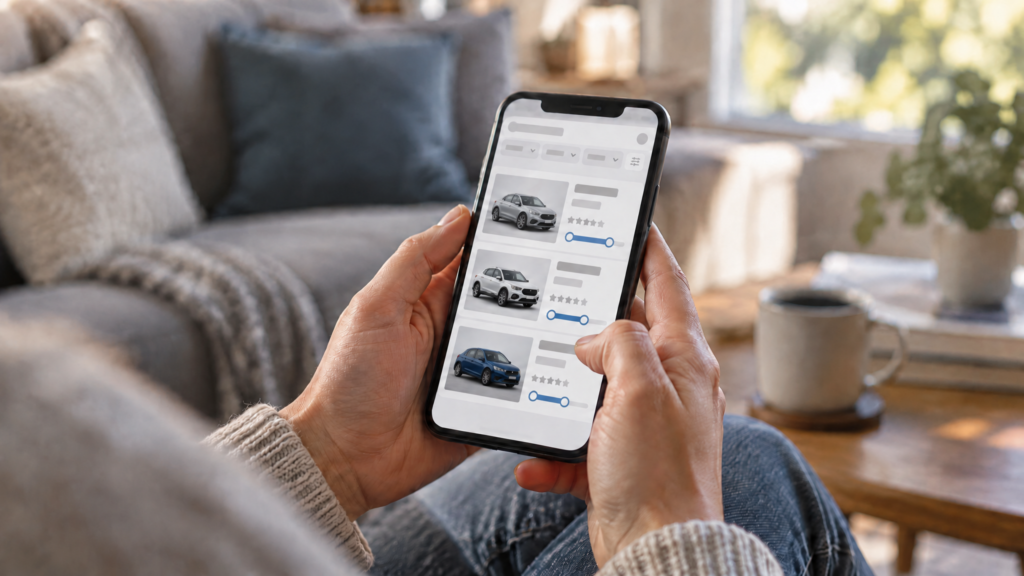
The automotive customer journey continues to evolve. Customers research online, compare options across multiple channels, and expect seamless experiences regardless of whether they engage online, remotely, or face-to-face. MSX research into the car buying journey shows that digital touchpoints now influence more stages of the vehicle purchasing journey, with 73% of consumers saying the ability to move seamlessly between interaction points is either important or an outright deal breaker.¹
This shift is changing what organizations need from their workforce.
Today’s employees are expected to do much more than understand products and processes. They must communicate confidently across digital and physical channels, adapt to changing customer needs, navigate increasingly complex vehicle technologies, and deliver consistent customer experiences at every touchpoint.
At the same time, automotive brands are introducing new products, technologies, and retail strategies more frequently than ever before. For employers, the challenge is no longer simply delivering training. It is ensuring employees can apply new knowledge effectively in real-world situations.
The challenge is not learning. It is application.
Most organizations understand the importance of training. Significant investments are made every year in learning platforms, classroom sessions, online courses, and content development.
Yet many leaders continue to face the same question: Has the learning actually changed behaviors and performance?
Completing a course does not necessarily mean an employee can confidently apply new skills in a customer conversation. Passing an assessment does not always translate into better outcomes on the showroom floor. Knowledge alone is rarely enough to drive meaningful behavior change.
This challenge becomes even more significant when organizations are implementing new sales approaches or introducing new technologies. Employees may understand what is expected of them, but still lack the confidence, experience, or practical application needed to execute effectively.
As a result, many organizations find themselves facing a gap between learning and performance.
Why traditional learning models are no longer enough
Historically, learning has often been delivered as a series of events. Employees attend training, complete assigned courses, and then return to their day-to-day responsibilities. The problem is that true skill development happens through application, reinforcement, and practice.
The World Economic Forum’s Future of Jobs Report highlights the growing importance of continuous learning as workforce capabilities evolve alongside technology and changing business requirements.² Developing capability has proven to become an ongoing process rather than a one-time intervention.
For automotive organizations, this means learning strategies must evolve beyond content delivery and knowledge transfer.
Employees need opportunities to test their understanding, practice new behaviors, receive constructive feedback, and refine their approach over time. Learning must become more closely connected to everyday work and real-world performance.
The growing role of coaching in automotive retail
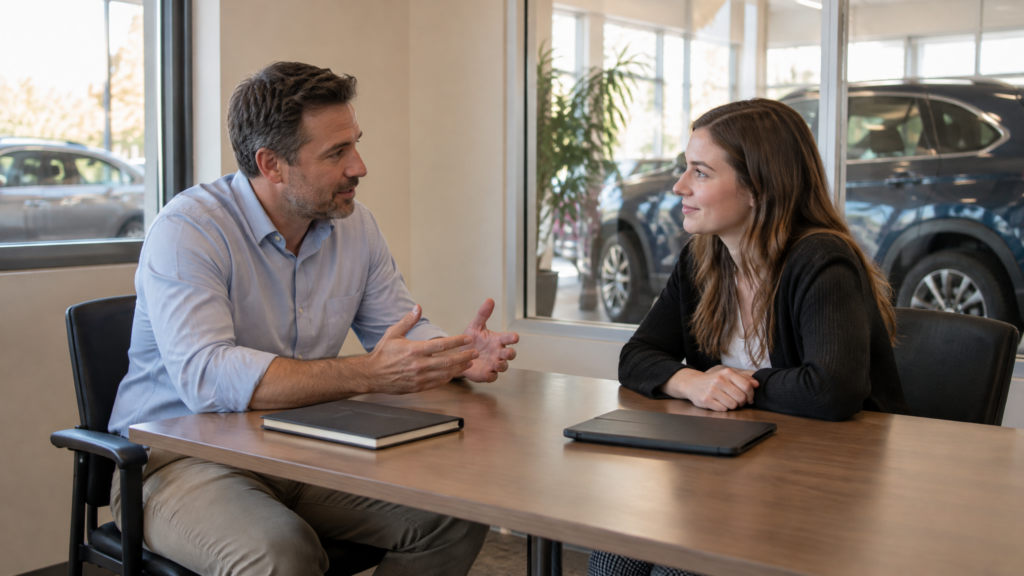
As sales models become more customer-centric, practice and coaching are taking on a more important role in workforce development.
While training can provide knowledge, repetition helps build confidence. This matters when serving well-informed customers. As automotive expert Ralph Kranz observes in MSX’s whitepaper: “The consumer can get a lot of information online, and those who walk into a dealership these days are almost better informed than salespeople.”¹ Whether an employee is learning a new sales process, discussing electric vehicle technology with customers, handling objections, or adapting to a new retail experience, practice plays a critical role in long-term success.
The most effective organizations recognize that people learn best when they can safely test new approaches before applying them with customers. This allows employees to develop confidence, identify areas for improvement, and strengthen skills before they have a direct impact on business performance.
Practice also helps create consistency. Across large dealer networks, rehearsal and coaching can help ensure employees are aligned around the same standards, processes, and customer experience expectations. In an increasingly complex retail environment, organizations need structured ways to support ongoing development at scale.
What organizations should look for in modern learning solutions
As workforce requirements continue to evolve, organizations need learning solutions that do more than deliver content. They need solutions that help employees move from knowledge to execution to retention.
Effective capability development should enable employees to:
Most importantly, learning should be integrated into everyday work rather than existing as a separate activity.
The future of workforce development lies in helping employees continuously learn, practice, and improve as business needs evolve.
Turning learning into performance
This is where scalable coaching solutions can play an important role.
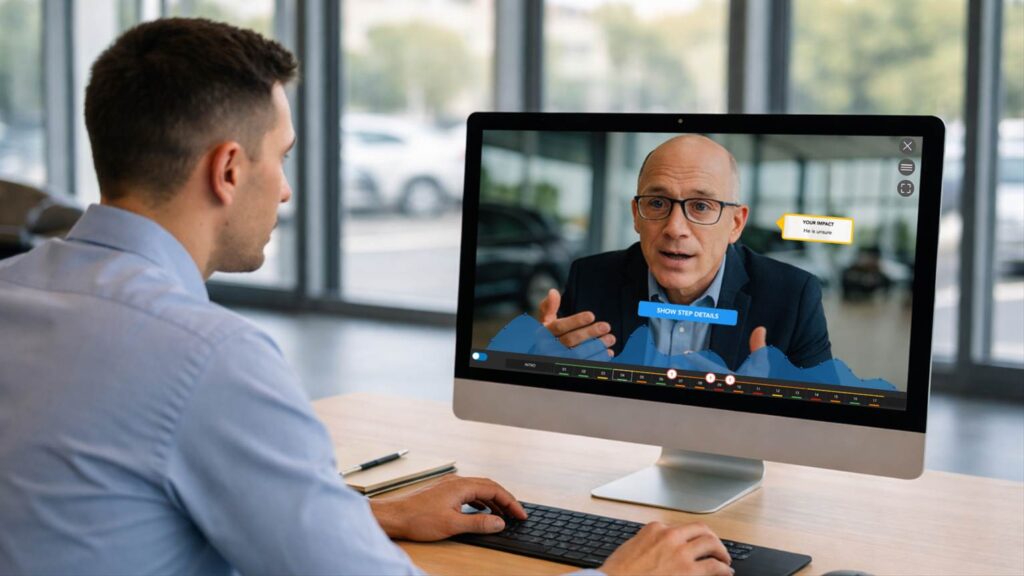
MSX developed MSX COACH to help organizations bridge the gap between learning, real-world performance and sustainment. Rather than focusing solely on knowledge transfer, the platform provides a structured environment where employees can practice business-critical conversations, receive feedback, and build confidence before applying their skills in customer-facing situations.
By creating opportunities for rehearsal, reinforcement, and continuous improvement, organizations can help employees move beyond simply understanding new concepts to confidently applying them in practice.
As automotive retail continues to evolve, this ability to turn learning into behavioral change and performance will become increasingly important.
At the same time, workforce capability extends beyond employee competence alone. Organizations also need support in areas such as customer experience transformation, operational excellence, sales performance improvement, technical readiness, and technology adoption. Alongside its learning solutions, MSX provides consultancy, performance improvement, and operational support services that help automotive organizations navigate today’s increasingly complex business environment.
If you’d like to learn more about how MSX helps automotive organizations turn learning into confident performance, contact us today to start the conversation.
Sources
- MSX International, Perfecting the Car Buying Journey: Virtual, Human, or the Best of Both Worlds?, June 2024.
- World Economic Forum, Future of Jobs Report.
Contact the Author
Lisa Rosenfeld
Global Solutions Director, MSX Learning
Lisa Rosenfeld
Global Solutions Director, MSX Learning