
SUCCESS STORY
Accessory Sales Reimagined
APIP unlocks 110% sales boost through structured modular implementation
Fast facts
Customer:
Dealer network of a leading volume manufacturer
Business challenge:
Accessory sales were hindered by fragmented departmental ownership, lack of incentives and training, and workshop capacity pressures, resulting in missed revenue opportunities and lost business to aftermarket providers.
Geographical coverage:
UK
Solution implemented:
MSX Accessories Performance Improvement Program (APIP) transformed accessory sales into a structured, customer-focused strategy that delivered rapid performance gains, boosted revenue, and significantly improved dealership engagement and customer satisfaction.
Fast facts
Customer:
Dealer network of a leading volume manufacturer
Business challenge:
Accessory sales were hindered by fragmented departmental ownership, lack of incentives and training, and workshop capacity pressures, resulting in missed revenue opportunities and lost business to aftermarket providers.
Geographical coverage:
UK
Solution implemented:
MSX Accessories Performance Improvement Program (APIP) transformed accessory sales into a structured, customer-focused strategy that delivered rapid performance gains, boosted revenue, and significantly improved dealership engagement and customer satisfaction.
Identifying the barriers to accessory sales growth
Accessories have traditionally been a neglected aspect of the vehicle sales process, often falling into the gaps between parts, service, and sales departments. In many dealerships, this meant that accessories were rarely discussed with customers, and sales teams lacked both the training and the incentive to promote them. For a leading volume vehicle manufacturer in the UK, this resulted in accessory sales being treated as an afterthought, despite the brand’s strong accessory portfolio and the clear potential to drive additional revenue and customer satisfaction.
The challenge was multifaceted. Ownership of accessory sales was fragmented across departments, leading to inconsistent processes and a lack of accountability. Sales teams were not confident in selling accessories, while parts departments operated in silos and service teams were preoccupied with warranty and recall work. This disconnect meant that valuable business was routinely lost to aftermarket providers, often simply because customers were unaware of the OEM-approved solutions available to them.
Compounding these issues were broader industry pressures. The manufacturer faced ongoing capacity constraints in workshops, driven by technician shortages and the need to prioritize warranty and recall work. As a result, finding new ways to grow customer-paid revenue became even more critical. Accessories, with their high margin potential and ability to enhance the ownership experience, represented a significant untapped opportunity.
Recognizing these challenges and the need for a more proactive approach, the manufacturer partnered with MSX to fundamentally transform the role of accessories within the sales journey. The goal was to shift accessories from a reactive, last-minute add-on to an integrated, strategic sales channel, unlocking new value for both the business and its customers.
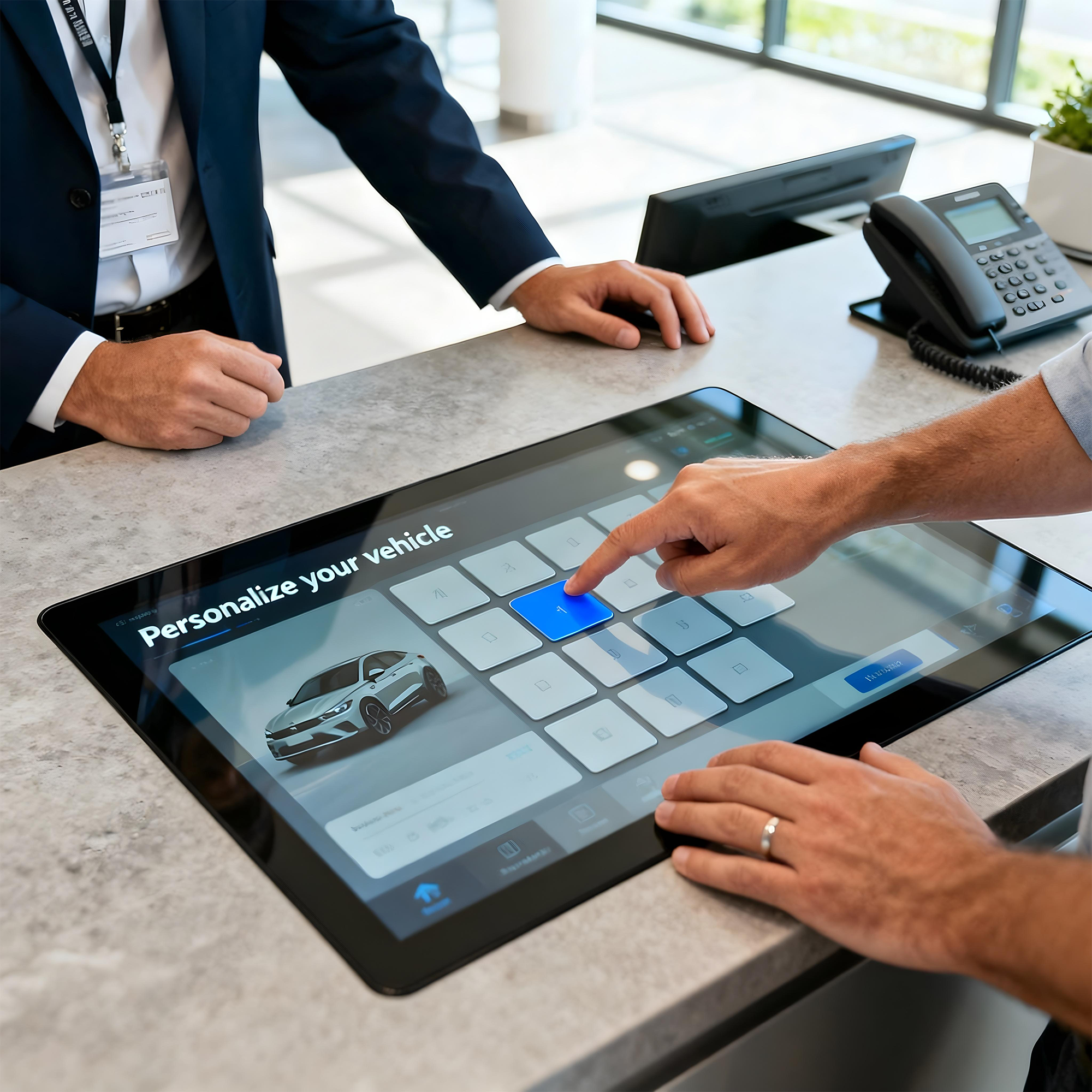
The challenge was multifaceted. Ownership of accessory sales was fragmented across departments, leading to inconsistent processes and a lack of accountability. Sales teams were not confident in selling accessories, while parts departments operated in silos and service teams were preoccupied with warranty and recall work. This disconnect meant that valuable business was routinely lost to aftermarket providers, often simply because customers were unaware of the OEM-approved solutions available to them.
Compounding these issues were broader industry pressures. The manufacturer faced ongoing capacity constraints in workshops, driven by technician shortages and the need to prioritize warranty and recall work. As a result, finding new ways to grow customer-paid revenue became even more critical. Accessories, with their high margin potential and ability to enhance the ownership experience, represented a significant untapped opportunity.
Recognizing these challenges and the need for a more proactive approach, the manufacturer partnered with MSX to fundamentally transform the role of accessories within the sales journey. The goal was to shift accessories from a reactive, last-minute add-on to an integrated, strategic sales channel, unlocking new value for both the business and its customers.
Insight-led, performance-driven, and dealer-focused
To address these challenges, MSX and the manufacturer launched the Accessories Performance Improvement Program (APIP) across selected UK dealerships. The initiative was designed not only to boost accessory sales but to fundamentally reshape how accessories were perceived and sold within the dealership environment. By turning a traditionally reactive and fragmented process into a structured, customer-focused strategy, the program aimed to bridge departmental silos, empower sales teams, and unlock a new stream of customer-paid revenue. It also sought to relieve pressure on workshop capacity by shifting focus toward high-margin, easy-to-fit accessories that could be sold proactively at the point of vehicle purchase. The solution was built on three core pillars:
Structured on-site coaching
Structured on-site coaching
Engaging dealer principals and department leads at an early stage of the implementation phase helped ensure buy-in, incentivizing sales teams, and integrating accessories into the standard sales script. Quick-win process tweaks – such as bundling accessories into finance offers – delivered immediate impact, while positioning accessories as value-added enhancements improved customer satisfaction. Performance was tracked through regular reviews and dashboards, ensuring transparency and continuous improvement.
Accelerating growth with purpose
The APIP Program delivered rapid and measurable results for the manufacturer and its dealer network. By embedding accessories into the sales conversation and aligning cross-functional teams around a shared strategy, dealerships were able to unlock previously untapped revenue streams and improve customer engagement. The program’s structured approach and practical coaching enabled dealers to implement changes quickly, with minimal disruption to existing workflows. This not only accelerated performance but also demonstrated the scalability of the model across different dealership profiles.
Here’s how the program delivered measurable impact:
year-on-year increase in targeted accessory pack sales
year-on-year growth in promoted products such as dash cams
accessory sales growth in mature program dealerships over three years
Dealerships reported fast results, practical implementation, and high credibility of MSX consultants. The program successfully transformed accessory sales into a proactive profit center, delivering greater value and customization for customers, without adding pressure on workshop capacity.
year-on-year increase in targeted accessory pack sales
year-on-year growth in promoted products such as dash cams
accessory sales growth in mature program dealerships over three years
Dealerships reported fast results, practical implementation, and high credibility of MSX consultants. The program successfully transformed accessory sales into a proactive profit center, delivering greater value and customization for customers, without adding pressure on workshop capacity.
Practical insight, lasting change
The program highlighted the importance of dealer engagement and cross-functional collaboration. Securing buy-in from dealer principals and aligning all departments were critical to success, while practical, hands-on coaching and quick-win process tweaks drove rapid adoption and results. Positioning accessories as personalization options not only boosted sales but also enhanced the customer experience.
Early pilots with luxury brands indicate even greater potential due to higher accessory value per vehicle, and the APIP model is well-positioned for broader rollout across markets and segments. Future enhancements may include digital tools for accessory visualization and further integration with finance offers.
In summary, MSX’s Accessories Performance Improvement Program unlocked significant untapped potential for the manufacturer’s UK dealer network. Through structured coaching, cross-functional collaboration, and a clear incentive model, the program transformed accessories from a neglected afterthought into a dynamic profit center, delivering measurable growth, enhanced customer value, and a blueprint for future expansion.
If you’d like to find out how MSX can transform accessory sales and unlock measurable growth for your business, get in touch today!

Practical insight, lasting change
The program highlighted the importance of dealer engagement and cross-functional collaboration. Securing buy-in from dealer principals and aligning all departments were critical to success, while practical, hands-on coaching and quick-win process tweaks drove rapid adoption and results. Positioning accessories as personalization options not only boosted sales but also enhanced the customer experience.
Early pilots with luxury brands indicate even greater potential due to higher accessory value per vehicle, and the APIP model is well-positioned for broader rollout across markets and segments. Future enhancements may include digital tools for accessory visualization and further integration with finance offers.
In summary, MSX’s Accessories Performance Improvement Program unlocked significant untapped potential for the manufacturer’s UK dealer network. Through structured coaching, cross-functional collaboration, and a clear incentive model, the program transformed accessories from a neglected afterthought into a dynamic profit center, delivering measurable growth, enhanced customer value, and a blueprint for future expansion.
If you’d like to find out how MSX can transform accessory sales and unlock measurable growth for your business, get in touch today!