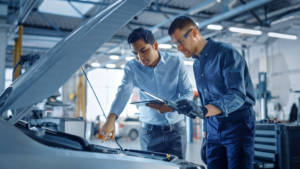
Authoring the future: OEM shrinks cost with more accurate streamlined publications

Authoring the future: OEM shrinks cost with more accurate streamlined publications

Fast facts

 Global, leading automotive manufacturer

Inefficient processes and tools affected technical authoring, leading to duplicated effort and wasted money and resources.

Global

An advanced authoring solution to streamline the design, development and maintenance of technical publications across a variety of formats globally.

Setting sustainable goals

Vehicles and their manufacturing processes are growing in complexity as new technologies, powertrains and more sustainable products are developed and continuously improved.

Consequently, the provision of technical documentation has become a complicated and highly specialized process.

Traditional methods are no longer sufficient in an industry that needs faster, more accurate and flexible technical publications strategies. This need has forced businesses to adopt unstructured processes and disparate systems and data sets that waste time, money and resources. To address the issue, OEMs must invest in more innovative approaches that harness advanced technologies, streamline processes, and foster collaboration.

MicrosoftTeams-image5


MSX has revolutionized the authoring process for this world-class OEM.

A smarter publishing approach

MSX collaborated with a world-class OEM to streamline its technical authoring processes and introduce efficiencies throughout the organization, helping it improve production and reduce costs.

MSX delivered a streamlined solution to design, develop and maintain technical publications across multiple formats. The solution required a strong authoring system and dynamic database to minimize errors and increase efficiency. MSX’s stateof-the-art content management system, pubFoundry, houses a repository of vehicle data grouped by topic. Its robust engineering review and sign-off tool, Collaborative Review System, allows multiple engineers to review the live document in collaboration with teams of authors and subject matter experts, ensuring the ongoing smooth delivery of technical authoring on a global scale.

MSX’s technical Information experts own and manage production of technical information at every stage of the development process. Authors manage content across all vehicle lines by ‘component’ rather than by ‘model’ or ‘series’. The technique improves the accuracy and consistency of information stored about each part of the vehicle and ensures all warnings, cautions, warranties and legalities surrounding them are in place across all vehicle lines and markets.

Working closely with engineers, designers and other key stakeholders, authors ensure that the documentation produced demonstrates the design and safe function of the vehicle in a way that’s reliable and meets the needs of the customer.

MicrosoftTeams-image4

The streamlined structure has improved consistency across vehicle lines.

Higher output, lower costs

MSX has revolutionized the authoring process for this world-class OEM through the use of advanced authoring tools and the delivery of clearer and more accurate technical publications that meet market demands.

The new component-led structure ensures that data is always relevant and validated by the appropriate author, and that publications are created in the most efficient way possible. Meanwhile, the new engineering review and sign-off tool limits conflicting comments and speeds up the review process, ensuring all technical documentation is up to date and accessible.

The new data-sharing processes and tools have enabled the OEM to reduce its translation budget by around 50%. Moreover, the streamlined structure has helped limit the volume of data housed within the system, helping improve consistency across vehicle lines and reducing administrative effort, resulting in further cost savings.

The project not only reduced the client’s budget and improved efficiency, but it has also enabled the brand’s delivery of 4,000 technical documents annually, with minimal errors. The organization has since rewarded MSX, whose team achieved 100% on-time delivery in streamlining the client’s authoring process, with a ‘Service Supplier of the Year’ award.

Reduction in translation budget
0 %
On time delivery
0 %
Deliverables produced annually
0
Service Supplier of the Year
0

Find out more about how MSX Technical Information Solutions can help improve the quality of your technical publications and cut costs for your business.

Related case studies

Exploring new opportunities in the wholesale parts industry

Exploring new opportunities in the wholesale parts industry

Many wholesale parts businesses have already experienced challenges driven by the rapid advancement and adoption of electric vehicles (EVs). But despite the number of EVs on the road starting to rise, there is still a substantial ICE vehicle parc, presenting huge opportunities for wholesale parts. Brands are developing strategies to maximize that opportunity and to get the most out of the existing, and still growing, ICE and hybrid parc.

Unveiling the untapped potential of customer retention

Customer-centricity remains paramount, particularly given that customers often opt for independent repairers post-warranty, driven by cost considerations. Recent research supports this trend, revealing cost as the primary driver for consumers choosing aftermarket servicing, while many also feel dealerships are perceived to have a higher level of workmanship and trust. In many markets, there is legislation that states vehicle owners don’t have to take their vehicle to the main dealer for repairs at all. Providing the independent repairer fits parts of an equal quality, then the warranty is still covered. But by pinpointing the areas where sales are declining and identifying new opportunities, OEMs can attract drivers back into their networks for servicing and maintenance needs.

The challenge intensifies with subsequent vehicle owners who may have bought their vehicle from an independent used car dealer and therefore lack dealer affiliations. Losing these customers to the independent repairer network means that the vehicles are no longer being fitted with OE parts and those parts sales are being lost. This creates further opportunities for franchised dealers to increase their penetration of OE parts in the independent network so that at the very least, they can ensure the vehicles being lost from the dealer network are still being fitted with parts sold by the OEM.

Combating the independent wholesaler

Networks of independent wholesalers from all over the world are joining forces to supply parts to independent repairers, further strengthening the competition for OEMs. For example, Amazon Business provides a platform for businesses to connect with suppliers, utilizing its innovative tools and successful ecommerce platform to help simplify their buying processes.

The foundation of a successful independent wholesaler hinges on four simple factors – ease of ordering, availability, a delivery schedule to fit their needs, and competitive pricing. These four factors will determine whether an independent repairer buys from them or someone else. Unlike a franchise dealer, independent wholesales offer a wide range of parts for multiple brands meaning that independent repairers can order parts for multiple brands with one phone call and receive them in one single delivery.

Many also have a range of added value services to help their customers repair vehicles and to build customer loyalty. This includes training, business advice, marketing support, specialist tools and technical information. And this well organized, growing network of independent organizations that are designed with the independent repairers needs in mind is creating increased competition for OEMs.

Source: MSX

Developing a successful partnership

But, there’s a significant advantage that OEMs hold over independent wholesalers – they can offer OE parts. It’s industry recognized that independent repairers prefer to fit original parts because they’re quality assured and guaranteed to fit first time. And while parts pricing certainly has a role to play, it is often the service offerings that better align with their needs that prompt customers to seek parts from alternative sources.

This opens up a world of new opportunities for OEMs to offer additional services and improve their partnership with independent repairers. By introducing an efficient and effective ordering system, be it dedicated phone lines with prompt pick-up or an e-commerce platform that includes a stock availability function, customers can easily place their orders online. Additionally, a dynamic distribution strategy aims to ensure that repairers can get the parts when they need them. To further compete with the independent network of parts wholesalers, OEMs should aim to offer a range of delivery options to meet customers’ needs, including regular delivery schedules, or through mobility-as-a service (MaaS) providers for ad hoc and express deliveries, which, despite being more costly, would offer a superior service. Ensuring stock profiles meet the needs of the trade business will also put dealers in a good place with independent repairers. And lastly, offering competitive pricing adds another layer of advantage. However, previous studies conducted by MSX examining IMT Trade Parts business revealed that independent repairers value the quality and assurance provided by genuine OE parts and acknowledge the associated price premium, with 46.8% of all respondents willing to pay an average of 10-20% more for OE parts compared to non-genuine alternatives, concluding that OEMs do not necessarily need to lower their pricing to match that of independent wholesalers.

A one-stop shop for Independent Repairers

Despite having all these factors in place, independent repairers still have to place multiple orders to source the parts they need for each brand of vehicle they have in for repair. Even multi-franchise dealers can still have dedicated ordering systems for each brand.

The ultimate solution will see OEM brands join together to provide a one-stop shop to independent repairers, offering a selection of branded OE parts through a single, central contact center. By introducing this single point of contact, OEMs can still distribute parts from their existing warehouses through a combined logistics network and fulfil a customer’s order in one delivery.

Source: MSX

Transform a department into a dedicated business unit

Currently, most trade parts businesses are managed at a departmental level within a franchise dealer, in the same way as a service or a new car sales department operates. To further capitalize on this area of the business, dealers could separate out their trade business and create a distinct business unit within the organization that allows them to operate independently, with a dedicated sales function specifically for trade parts.

In addition to establishing the team structure, the introduction of a variety of value-added services, such as specialized tools or a technical hotline for independent repairers, not only assists dealers in cultivating strong relationships but also opens avenues for engaging with customers and effectively promoting their trade parts enterprise.

A dedicated sales team will allow dealers to proactively enhance their trade parts business. This involves examining upcoming service appointments and identifying opportunities for upselling. However, many retailers are currently ill-equipped to execute this strategy. Substantial staff retraining and restructuring will be necessary to effectively transition the department into a wholesale parts enterprise.

The need for a unified approach

Today, the point in which a customer switches from the OE network to an independent repairer is fairly evident. And under European legislation, OEMs must provide independent network access to technical repair methodology, although this often incurs a fee. In addition to the cost of the technical repair methodology, specialist equipment and tools are often needed to repair a particular brand of vehicle, and many independent repairers are finding themselves with insufficient volume to justify the investment needed.

To further optimize these opportunities, OEMs could look to franchise their brand and officially sanction independent repairers, making them part of the brand’s network as a secondary repairer network. This will offer customers many of the advantages of visiting a dealer but at a lower price point. Once a new car customer leaves the dealer network, they would take their vehicle to the specialist independent repairer who would be approved by the brand to fit original parts. The brand would provide training, tooling and quality control, and the independent repairer must comply with certain standards and regular quality audits. This collaboration has huge advantages for all involved, keeping the trade parts sales within the dealer organization and enhancing the marketing opportunities for the independent repairer who will offer original parts and identify themselves as a brand specialist.

We’re already seeing this collaboration from some OEMs, and it’s also prevalent in the collision repair industry, as outlined in a recent article by fleetforward.com, entitled, ‘EVs Save on Maintenance, What About Collision Repairs?‘ The article explores how collision repair technicians are partnering with strategic service partners to help with diagnostic and reprogramming tools, further demonstrating the strategy’s potential to succeed and greatly benefit all involved in the servicing and repairs arena.

Contact the Author

Rikard_Asbjornsen

Rikard Asbjornsen

Global Solutions Leader, Parts, Accessories & Service Perfomance

Contact the Author

Rikard_Asbjornsen

Rikard Asbjornsen

 Global Solutions Leader, Parts, Accessories & Service Perfomance

.

Related Articles

Embracing technological advances and expert support for improved authoring efficiencies

Embracing technological advances and expert support for improved authoring efficiencies

Technical publications have undergone incredible changes in recent years. Today, they are broader and more accessible than ever and touch every aspect of the automotive experience. But advancing technologies, electrification, and new mobility and autonomous options are increasing the demand for, and complexity of the technical information required. Outdated processes and inaccurate information are making it difficult for OEMs to publish content accurately and cost effectively.

And despite paper manuals, books, and guides still needing to exist to accommodate regional laws, OEMs are pushing the industry, and legislation, to a digital standard. These factors are not only increasing the demand for more complex technical information, they’re also creating new possibilities for manufacturers. Holographic experiences, for example, could replace printed owners’ manuals, and connected cars could self-diagnose or schedule repair visits. But behind these new opportunities is the requirement for a strong foundation of technical information.

Antiquated solutions, complex processes, advancing technology and the disparate management of technical information throughout the organization will lead to inaccuracies, longer times to completion and higher costs. Reduced quality publications are unable to provide technicians with the correct information needed to tailor experiences that nurture customer retention.

The creation of technical publications

The development of technical publications has evolved significantly from the arduous and error-prone process of the past. Now, computer-aided design (CAD) data contains the information that technical authors use to write owner manuals, service and body repair manuals, and wiring and parts catalogs. Illustrations such as 2D vectors or 3D images and animations can be generated directly from the CAD models and applied to all aspects of manufacturing, retail, service, and the ownership experience. They are shared across multiple platforms, appearing in owners’ manuals, service manuals, online portals, and apps. With CAD-friendly practices in place, manufacturers can utilize model-based engineering and metadata tagging methods to identify and organize all vehicle information, no matter the platform or storage method. However, getting all this information in the right place is challenging, and adjustments and updates can be difficult to implement across such a large scale.

To combat this, OEMs are turning to third-party organizations which specialize in data utilization and its application to increase agility and accuracy while reducing overall cost. By streamlining the flow of data, and by delivering near real-time updates, these data specialists have helped automotive businesses regain complete control over their content creation, re-use and publishing, as well as increase authoring efficiencies and consistency.

How can technical publications reduce ADAS-related repair issues?

A survey conducted by the IIHS in 2021 identified that a large proportion of drivers who had repairs to their advanced driver assistance systems (ADAS) experienced post-repair issues with the features. In total, 496 respondents had at least one of their ADAS features repaired (resulting in 1,024 analyzed repairs).


Dealerships need accurate and effective technical publications to help them repair vehicles with complex new technologies, such as ADAS, first time. With simplified, centralized processes and the help of support teams, manufacturers can offer up-to-date information that enables technicians to repair these features correctly.

Source: IIHS – Consumer experiences with crash avoidance feature repairs.
* Considering all three features assessed: front crash prevention, blind spot detection and camera repairs.

The importance of accuracy

In the world of technical publications, information accuracy is paramount. But achieving this level of accuracy is a challenge for businesses who must also increase delivery speeds and reduce overall costs. By adopting the support of specialists with experience in automotive technical publications, businesses can achieve a competitive advantage with their technical publication services. Authoring efforts can improve dramatically, offering consumers access to brand, model, VIN and trim-level technical data with 99+% accuracy, and first-time-right rates and on-time delivery of publications will increase.

And with a rise in EV popularity, accuracy in technical publications is now more relevant than ever, both in terms of educating and protecting customers, service technicians, and first responders. EVs use extremely powerful, high-voltage batteries, so providing the necessary information for end-users to interact with this technology safely and confidently is paramount. If repeated repairs occur, the technical publication will need to be examined to identify whether the event was caused by inaccurate or missing information, insufficient training or a recurring technical fault with the vehicle.

Equally important is an understanding of how an issue with internal components can affect other connected components and systems within the vehicle. This is where emergency response guides (ERGs) are essential to first responders and must be readily available and accessible in any situation. They answer critical questions such as how should an emergency medical technician approach an EV submerged in water? Where should a rescuer apply force if a hydraulic rescue apparatus is needed? And how can it be operated in a way that ensures that a battery or other dangerous component isn’t damaged further?

With agile technology, streamlined processes, CAD-friendly data and expert support, updates and changes can be made and delivered in real-time, ensuring that technicians always have the latest information available and enabling OEMs to keep their customers informed of impending updates.

The future of technical publications

In order to simplify the creation, updates, and reuse of publication information and data, businesses need to introduce software and systems that are flexible, intuitive and accessible cross-platform. Streamlined processes will increase collaboration, meet global expectations and reduce costs. CAD-friendly software and common terminology allow for technical information data to be shared seamlessly across platforms to support other areas of the industry, from the management of warranty claims to technician training, as well as vehicle line development which may be influenced by the frequency of common repairs.

But it’s not just OEMs and their dealer networks that benefit from this agile approach. Vehicle owners will experience improved diagnosis and repair accuracy, as well as an improved overall experience with the brand. Publication data, and even real-time updates can be shared digitally, keeping end-users updated with the latest information.

“The new digital standard allows technical data to benefit all segments of the industry, from the management of warranty claims to technician training and more.”

As vehicle software becomes more informative, interactive and intuitive for vehicle owners, OEMs will need to channel that data into diagnostic information and make it available across the business. They must stay ahead of customer needs by anticipating what’s to come and adapting to changes as quickly as their competitors and disruptors whose practices are less hindered by legacy tools and solutions.

MSX has deep knowledge and understanding of the automotive industry on a global scale. Our world-class custom tools have been built to handle reuse of owner and service information across makes, models and configurations. With these tools, MSX are revolutionizing technical authoring with a robust set of features, content management, analytics, tracking and reporting capabilities. Our in-house talent offers a distinct advantage in the quality of the technical publications it produces, with cross-trained resources prepared to meet future advancements, and a global presence that enables us to source the right talent and support local activities.

Contact the Author

Ralf-Kronenburger.png

Ralf Kronenbuerger

Regional Delivery Leader – NORTH AMERICA and LATAM

Contact the Author

Ralf-Kronenburger.png

Ralf Kronenbuerger


Regional Delivery Leader – NORTH AMERICA and LATAM

Related Articles