Is your 2027 strategy overlooking the vehicles that will keep your workshops busy? The vehicles already on the road will shape your service demand, workshop capacity and customer relationships next year. The question is whether your network is ready to support them.
As the vehicle population changes, aftersales leaders need a clear view of where demand will come from, what skills it will require and how effectively their teams can respond.
Why the 2027 plan matters now
The long-term direction of the European aftermarket is becoming clearer. Boston Consulting Group (BCG) projects that more than one-third of vehicles on European roads will be over 16 years old by 2035, up from 23% in 2021. It also expects battery electric vehicles to account for a growing share of the vehicle population, bringing different maintenance and repair requirements.
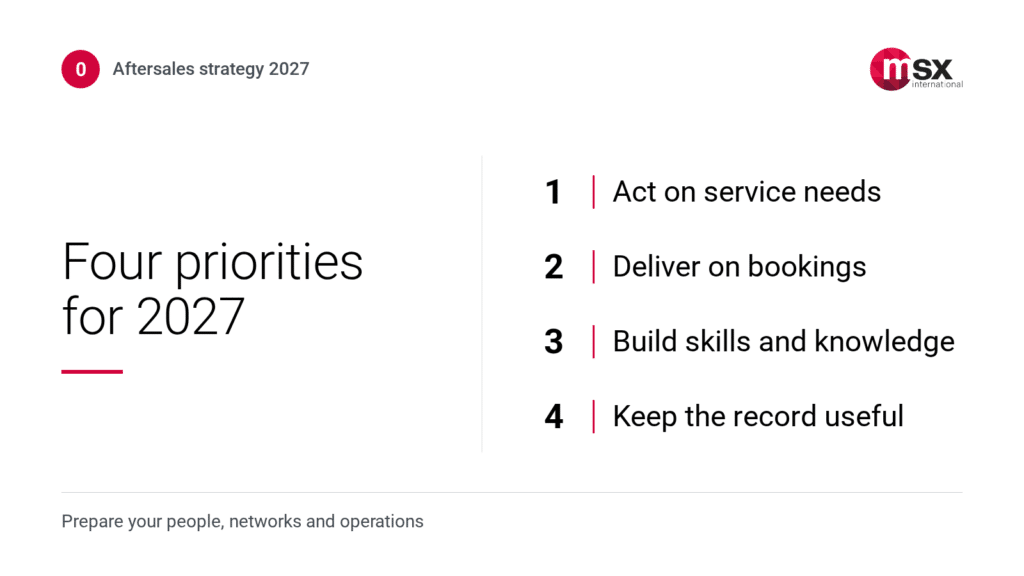
These are projections for Europe 2035. The mix of vehicles and pace of change will vary by market, and the capabilities needed to respond will take time to build. The 2027 planning cycle is an opportunity to identify which investments in data, skills and network capacity should begin now. These four priorities can help turn that view into a practical plan for 2027.
1. A service need only creates an opportunity when someone acts on it
A vehicle alert or maintenance forecast can reveal a potential need. The strategic challenge is deciding which signals matter, who should respond and how that response fits the customer’s circumstances.
A fleet operator may need to balance maintenance with vehicle availability. A manufacturer or dealer may need to decide whether an alert warrants contact and how to make that contact relevant. In each case, data becomes valuable when it leads to a clear, timely action.
For 2027, leaders should examine the path from insight to intervention: Which needs are visible today? Which are being acted on? And where does ownership become unclear?
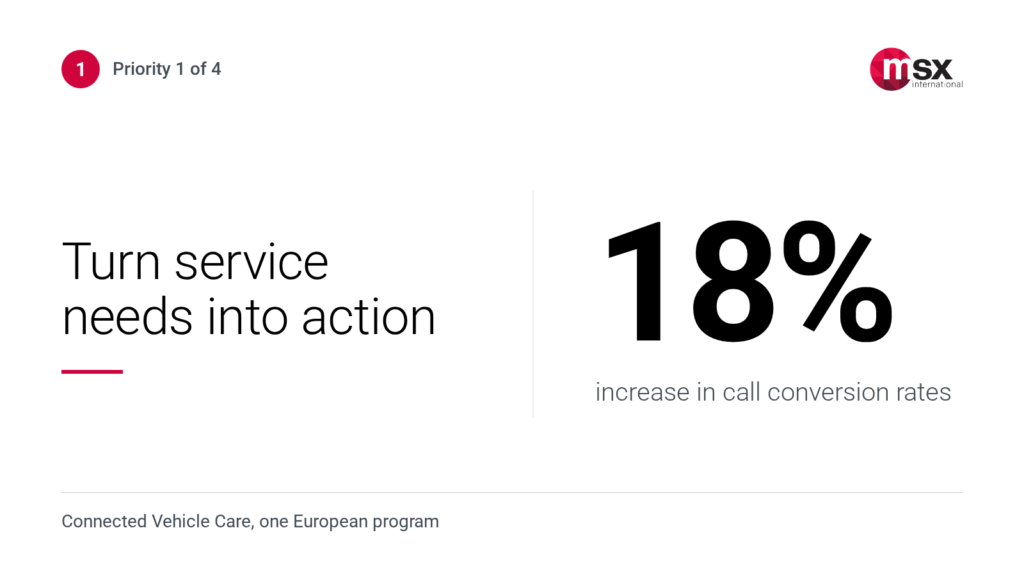
MSX supports this work through Lifecycle Optimization powered by Contour and Connected Vehicle Care. In one European Connected Vehicle Care program, needs-based outreach achieved an 18% increase in call conversion rates compared with traditional predictive calling methods.
2. A booking is where the promise meets the network
A service opportunity is only useful to the customer if the network can deliver on it. That makes workshop readiness a customer engagement issue as well as an operational one.
Outreach, scheduling, parts availability and workshop capacity need to work together. If one part of that chain is under pressure, the customer may experience the consequences long after the initial contact.
As organizations set their 2027 booking and retention ambitions, they should ask whether local teams have the capacity to meet them—and whether feedback from those teams shapes future outreach.
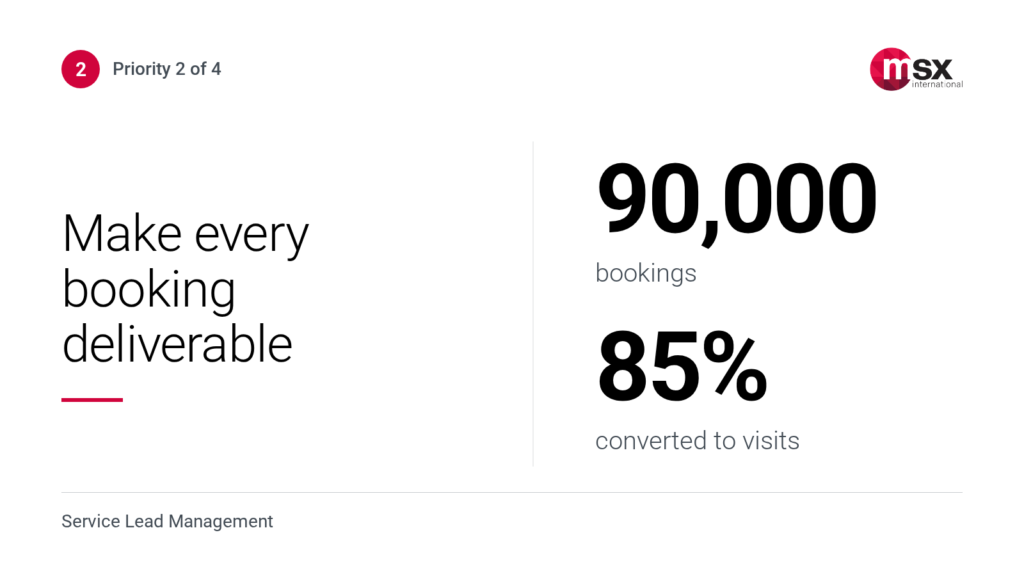
MSX Service Lead Management connects customer contact with booking and follow-up. For one leading European national sales company, the program generated 90,000 bookings, 85% of which converted to visits.
The same need for coordination applies to recalls, where MSX Recall Management supports planning across customer communications, parts and network capacity.
3. Workshop readiness depends on skills and access to knowledge
A forecast of workshop volume is a starting point. Leaders also need to understand what kind of work those vehicles will require.
An older vehicle may present different service needs from a newer electric model. BCG identifies high-voltage systems and thermal management as areas where European aftermarket businesses can develop capabilities for electric vehicles.
For 2027, the practical question is where those capabilities are needed. A network-wide training plan may set the direction, but individual locations need support that reflects the vehicles and repair tasks they are likely to encounter. Repair Quality Support, Learning and Field Teams help networks strengthen repair processes and develop skills in day-to-day operations.
Access to knowledge is part of the same challenge. A technician needs information that is current, relevant to the task and easy to find during a repair. Leaders should consider how technical content is created and maintained, how it reaches the workshop and when human expertise is needed.
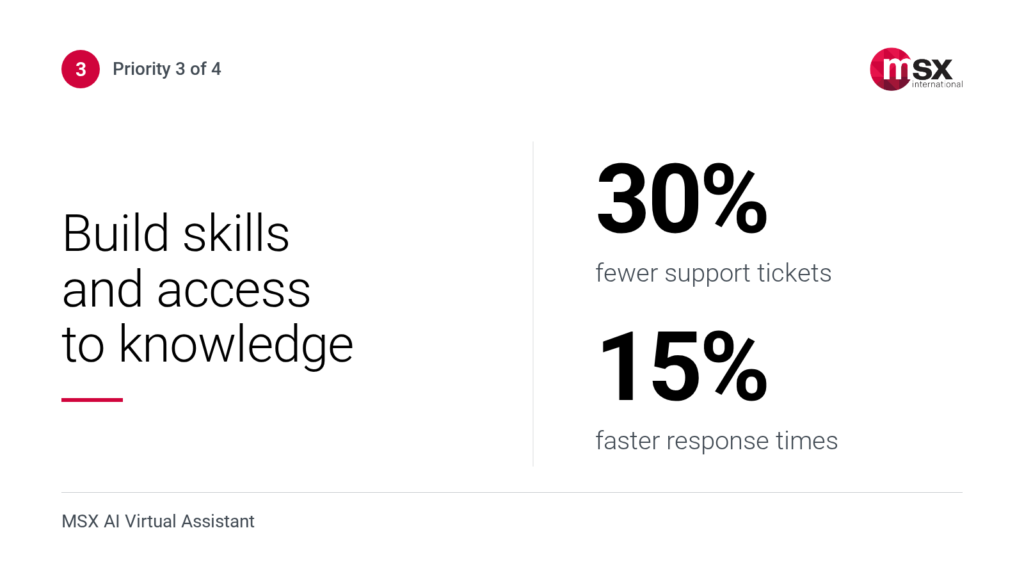
The MSX AI Virtual Assistant helps technicians find relevant technical information. In validation work with a multinational manufacturer, it delivered a 30% reduction in support tickets and 15% faster response times. pubFoundry supports the creation, review and distribution of technical content.
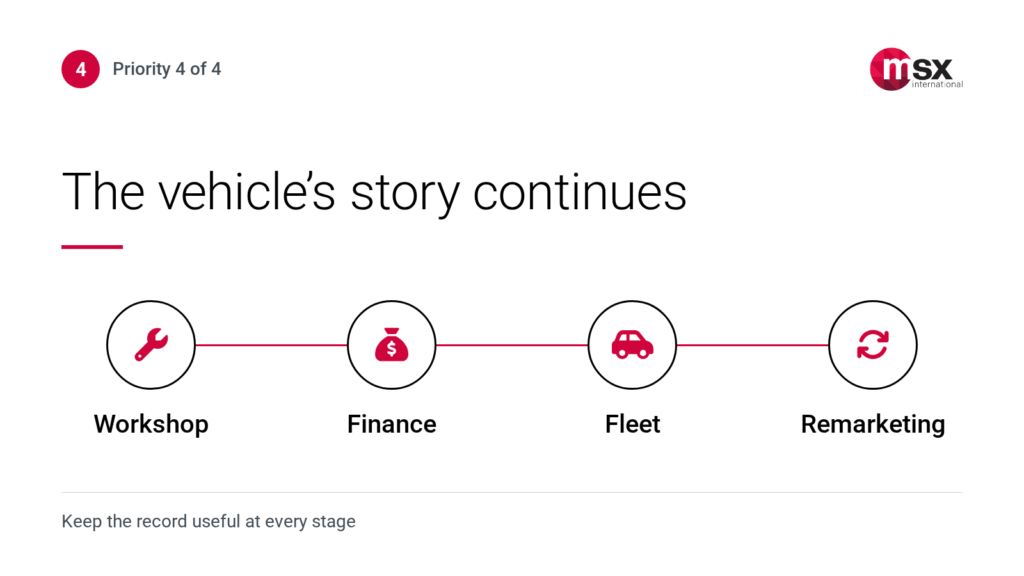
4. The repair may be complete, but the vehicle’s story continues
A service record can inform decisions well beyond the workshop. Finance teams may need it to resolve a billing query; fleet operators may use it to understand vehicle costs; remarketing teams may need it when a vehicle leaves the fleet.
That makes information quality a strategic issue. If the next team cannot access or understand a record, it may need to spend time finding answers that should already be available.
For 2027, organizations should follow a service record through its next stages and ask: Is the information complete? Can the right people access it? Does it support the next decision?
MSX supports connected fleet workflows through MobilityNext, Central Billing and its Fleet and Remarketing Solution, helping teams manage activities across the vehicle lifecycle.
Put the 2027 plan to the test
Choose one vehicle group and follow its journey – from the first sign of a service need through booking, repair and the next lifecycle decision.
Where does information stop? Where does a customer wait? Where does a team need more support?
The answers can help identify where to focus your 2027 plan, with clear owners and measures such as booking conversion, first-time fix, vehicle downtime and recall completion.
Where do you see the greatest opportunity to strengthen your aftersales operation for 2027?
If you’re ready to explore your network’s readiness, reach out to the MSX team to discuss an Aftersales Readiness Check, focused on demand visibility, network capacity, workshop capabilities and information flow.